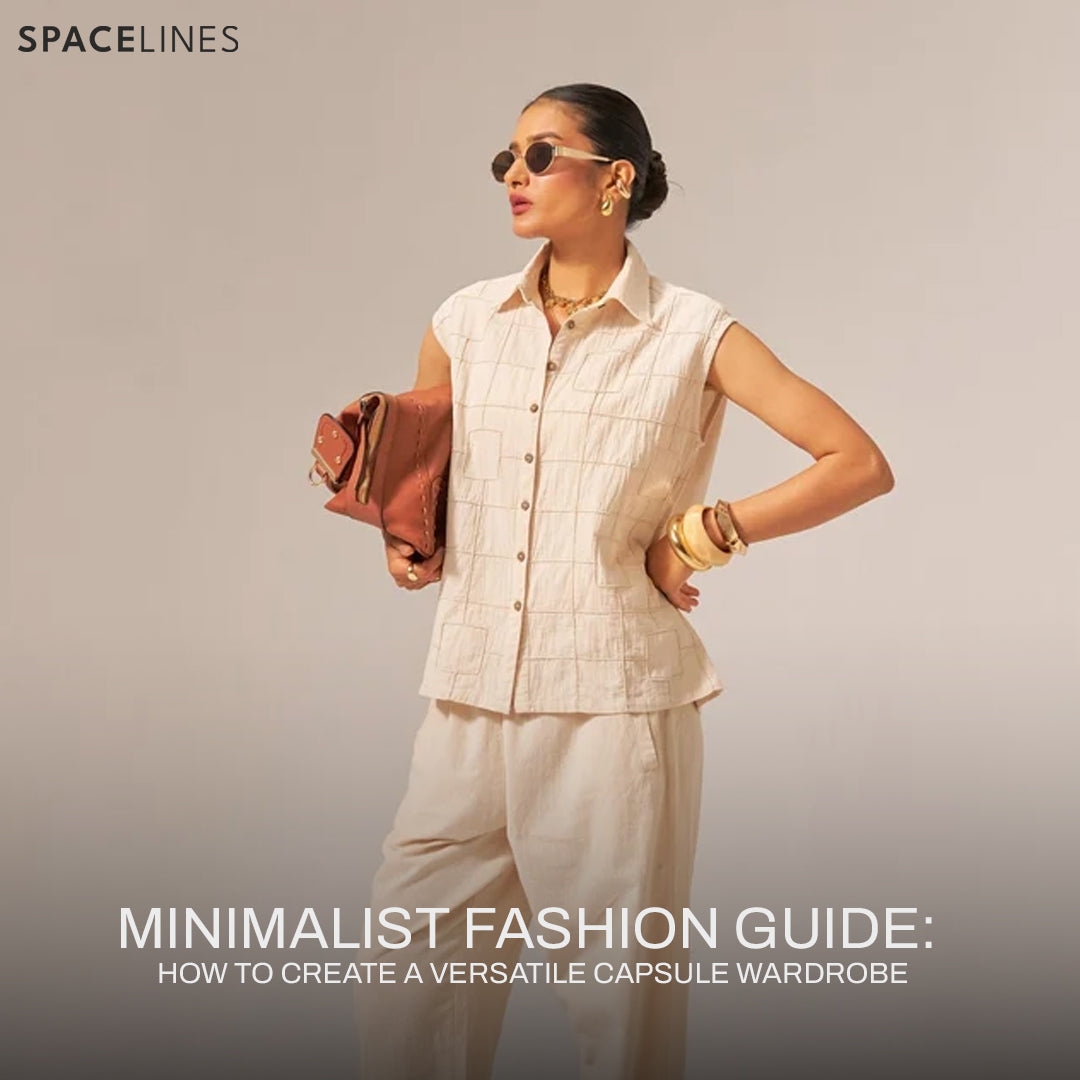
Minimalist Fashion Guide: How to Create a Versatile Capsule Wardrobe
A lot of women own a full wardrobe and still open it most mornings feeling like there's nothing to wear. There are clothes for work, clothes for weekends, something for that one wedding, a dress from a holiday two years ago, a few things bought on sale that never quite found a place. Individually, none of it is wrong. Together, most of it doesn't actually work.
The problem usually isn't a lack of clothing. It's a lack of connection between the pieces. A capsule wardrobe is really just a fix for that — a smaller, more intentional collection of clothes chosen specifically because they work with each other, not because each one is impressive on its own. It isn't about owning less for the sake of owning less. It's closer to minimalist fashion in the practical sense: fewer decisions, more usable combinations, and a wardrobe that actually reflects how you live.
What Is a Capsule Wardrobe?
A capsule wardrobe is a curated selection of clothing designed to work together across multiple outfits and occasions, rather than a collection of individually nice pieces that happen to share a closet.
It's worth clearing up a few misconceptions early. A capsule wardrobe doesn't have to be tiny — some versions run to dozens of pieces. It doesn't have to be entirely neutral, colourless, or beige. It doesn't require throwing out everything you currently own. It doesn't mean wearing the exact same outfit every day. And it definitely doesn't require following someone else's strict "30 pieces" or "50 pieces" rule, since that number was never really about your life.
The real principle underneath all of this is interchangeability. A good capsule wardrobe lets one top work with several different bottoms, and one bottom work with several different tops — so the total number of outfits you can build is always higher than the number of items you actually own.
Capsule Wardrobe vs Minimalist Wardrobe
These two terms get used interchangeably, but they're not quite the same thing.
A capsule wardrobe is a practical system — a specific, selected group of pieces chosen to work together, usually with a particular lifestyle or season in mind. A minimalist wardrobe is a broader philosophy, less about a defined set of pieces and more about reducing unnecessary possessions in general and prioritising what's genuinely useful or meaningful to you.
You can have a minimalist wardrobe without following a strict capsule system. You can have a capsule wardrobe without identifying as a minimalist at all — plenty of people build capsules purely for the practical benefit of easier mornings and lighter suitcases. And plenty of people do both at once. Neither one requires the other, even though they tend to overlap in practice.
Why a Capsule Wardrobe Works
Fewer decisions in the morning. Choosing between fifteen mismatched options takes more mental effort than choosing between eight pieces that are all guaranteed to work together, simply because there are fewer combinations to weigh and less risk of getting it wrong.
More outfit combinations. A well-connected group of ten pieces can genuinely produce more wearable outfits than twenty pieces that don't talk to each other — the maths favours coordination over sheer volume.
Less impulse shopping. When your basics are already solid, a random new purchase gets measured against something real. It becomes easier to ask "does this actually fit in?" instead of buying on instinct.
Better cost per wear. A ₹6,000 piece worn thirty times works out cheaper, practically speaking, than a ₹2,000 piece worn once or twice and then forgotten — a well-made trouser like the Poise Pant, built to hold up across dozens of wears, illustrates the logic better than a cheaper, more disposable alternative would. Price alone doesn't tell you much — frequency of wear does.
Easier packing. A wardrobe built around pieces that already coordinate makes travel packing dramatically simpler, since almost everything you own can mix with almost everything else.
Stronger personal style. Repeating certain silhouettes, colours and proportions over time tends to make your style more recognisable — to yourself as much as anyone else — rather than diluting it.
The 5 Building Blocks of a Capsule Wardrobe
1. Base Pieces
Choose trousers, straight-leg pants, simple skirts, everyday jeans or comfortable shorts for fit and versatility.
2. Tops
Classic shirts, simple tops, versatile blouses and lightweight layers give you different ways to style the same bottoms.
3. One-and-Done Pieces
Dresses, and jumpsuits where relevant. These solve an outfit in a single decision — useful for busy mornings or when you want to think about clothing as little as possible. The Coconutty Shirt Dress is a fairly literal example — a shirt and a dress solved in one piece.
4. Layering Pieces
Jackets, overshirts, lightweight outerwear, waistcoats where relevant. Layers add warmth, structure, and the ability to dress the same base outfit up or down. A reversible piece like the Frame Reversible Shirt is worth mentioning here too, since it can function as a layer as easily as a standalone shirt.
5. Accent Pieces
Minimalist doesn't mean colourless. Accent pieces bring in colour, texture, print, and personality — a bright top, a patterned piece, something with a bit more presence than the rest of the wardrobe. A brighter set like the Release Set in Pink shows what an accent piece looks like in practice — it's the one item in the wardrobe doing more visual work than the rest. These exist specifically to prevent a capsule from feeling flat.
How Many Pieces Should a Capsule Wardrobe Have?
There's no single correct number, and any article claiming otherwise is oversimplifying. What actually determines size is lifestyle.
A small capsule suits someone who genuinely prefers a highly edited wardrobe and doesn't mind repeating outfits often. An everyday capsule suits someone who needs coverage across work, casual days, and weekends without much overlap in dress code. An expanded capsule suits someone juggling varied work requirements, frequent travel, an active social calendar, and real seasonal shifts in climate.
A capsule wardrobe could reasonably include anywhere from a couple of dozen highly coordinated pieces to a considerably larger wardrobe, depending entirely on what your actual week looks like. The number isn't the point — the coordination is.
The Ideal Capsule Wardrobe Essentials
These are starting guidelines, not rules to follow exactly — treat them as a framework to adjust around your own life.
A reasonable starting point looks like: 3 to 5 versatile tops, 2 to 4 shirts, 2 to 4 trousers, 1 to 2 dresses, 1 to 2 layering pieces, one versatile co-ord set, 1 to 2 casual bottoms, and a small number of optional statement or accent pieces.
Spacelines' own range maps onto this fairly naturally, since it's built around exactly these categories. A shirt like the Poise Shirt or the Sage Shirt can anchor the "shirts" slot, a pair like the Rice Cake Flared Pants or Bijou Barrel Style Pants covers the trousers slot, and a piece like the Wander Dress or Daydream Dress fills the one-and-done dress category. None of this means you need these exact pieces — it's simply easier to picture capsule wardrobe essentials with real examples in front of you.
How to Choose Capsule Wardrobe Colours
Base colours — black, white, cream, navy, beige, brown, grey, olive — tend to form the foundation of most capsule wardrobes, though nobody has to choose all of these or even most of them. The point is picking two or three that you genuinely like and will wear repeatedly, not adopting a palette because it's "supposed" to be neutral. A piece like the Still Shirt in a quiet neutral shade shows how a base-colour piece is meant to work — reliable rather than attention-grabbing.
Supporting colours — two or three additional shades that complement your base colours — add range without breaking the system. Think of a rust or a sage green sitting alongside a navy-and-cream foundation, similar to how the Sage Pant introduces a supporting tone that still sits comfortably next to neutrals.
Accent colours — one brighter shade or a print — stop the whole wardrobe from feeling repetitive. This is where a single bold piece earns its keep precisely because everything else around it is calmer.
A simple, practical rule to apply before buying anything: choose colours that work with at least three other pieces you already own. If a colour can't clear that bar, it's probably not adding as much as it seems to in the store.
How to Create More Versatile Outfits From Fewer Clothes
This is really the core skill behind versatile outfits — understanding that styling changes what a single piece can do.
One shirt can work for the office with tailored trousers, for a casual day with jeans, for a holiday with shorts, or as a light layer thrown over a dress in the evening — the Own It Shirt is a reasonable example of a shirt cut plainly enough to move across all four of those settings. One pair of trousers can pair with a fitted top for a sharper look, an oversized shirt for something relaxed, a soft blouse for dinner, or a simple tee for running errands. One dress can go from sandals in the daytime to flats at the office, a jacket for dinner afterward, or sneakers for a travel day.
None of this changes the garment itself — it changes the function of the garment, which is exactly the multiplier effect a capsule wardrobe is built around.
10 Example Capsule Wardrobe Outfit Combinations
1. Office: A structured shirt like the Ivory State Shirt tucked into tailored trousers.
2. Casual Friday: A relaxed shirt over jeans.
3. Coffee Date: A simple top paired with wide-leg trousers like the Own It Pant.
4. Travel Day: A dress such as the Daydream Dress with a lightweight layer over it for the flight.
5. Weekend Out: A co-ord set — the Ikigai Black Co-ord Set is a good example — worn together as designed.
6. Errands: The same co-ord's pieces worn separately — the top with jeans one day, the bottom with a plain tee the next.
7. Summer Afternoon: A shirt with shorts for something breathable and low-effort.
8. Making a Statement: A neutral top paired with a bolder-coloured bottom to let one piece carry the outfit's personality.
9. Dinner: A dress with a jacket layered over it when the evening cools down.
10. Everyday: A relaxed shirt such as the Sway Shirt with equally relaxed pants for a no-effort, still-put-together look.
Capsule Wardrobe for Indian Weather
A capsule wardrobe formula built for a European winter doesn't transfer directly to Indian conditions, and it's worth being upfront about that rather than pretending one system fits everywhere.
Heat and humidity for large parts of the year make breathable fabrics genuinely practical rather than just a styling preference — cotton and linen tend to hold up better through long, warm days than heavier synthetic fabrics. Monsoon months add another consideration: quick-drying, easy-care pieces matter more than delicate ones. Heavily air-conditioned offices call for a light layer even in summer, since indoor temperatures can swing quite differently from outdoor ones. And frequent travel between cities with genuinely different climates means a capsule built with some flexibility in mind — a layer that can be added or removed — tends to work better than one built for a single, fixed climate.
None of this means cotton or linen is automatically the "sustainable" choice in every circumstance — that depends on a lot of other factors. But for comfort and practicality across an Indian year, breathable natural fabrics do a lot of the heavy lifting.
How to Build a Capsule Wardrobe for Work
A small, dedicated work capsule might include 2 trousers, 3 tops, 2 shirts, 1 dress, and 1 layering piece — seven or eight items that, combined thoughtfully, produce considerably more actual outfits than that number suggests.
A shirt like the Rise Shirt paired with the Frame Pant covers a structured day. The same shirt, worn a little more relaxed with a different trouser, covers a lighter one. A dress like the Pinacolada Shirt Dress handles a day with back-to-back meetings without much thought required, and a layer — a light jacket or an overshirt — adapts the whole capsule to an unpredictable office AC.
Not every workplace has the same dress code, of course. A formal office and a creative studio will pull different combinations from the same base pieces, which is really the advantage of building this way — the same seven or eight items can flex to fit different professional settings.
Capsule Wardrobe for Travel
Travel is where a capsule wardrobe earns its keep most obviously. Fewer pieces mean less luggage. Pre-planned coordination means less decision-making once you're actually on the trip. Rewearing pieces across different days stops feeling like a compromise once everything is designed to work together in the first place.
A realistic 5 to 7 day travel capsule might include: 2 pairs of trousers or one trouser and one pair of shorts, 3 tops, 1 versatile dress, 1 light layer for evenings or air-conditioned spaces, and comfortable, weather-appropriate footwear. A co-ord set works particularly well for travel specifically because it doubles as two separate outfits — worn together for one look, split apart for two more.
How to Build a Capsule Wardrobe Without Throwing Away Clothes
Building a capsule doesn't have to start with a dramatic wardrobe clear-out.
Step 1: Empty and assess. Take everything out and actually look at what you own, rather than deciding based on memory.
Step 2: Identify your most-worn pieces. These tell you more about your actual style and needs than any list of "essentials" ever could.
Step 3: Find wardrobe gaps. Notice what you keep needing but don't actually own — this is a much better guide for future shopping than trend lists.
Step 4: Identify duplicate items. Multiple near-identical pieces usually mean one is genuinely better than the others, and the rest can go.
Step 5: Create outfit combinations. Physically try pairing pieces you don't normally combine — you'll often find more usable outfits hiding in your existing wardrobe than expected.
Step 6: Separate seasonal items. Store off-season pieces so your active wardrobe reflects only what's actually relevant right now.
Step 7: Decide what actually needs to go. Only after the steps above should you decide what to remove — and even then, "removing" doesn't have to mean discarding. Pieces can be repaired, altered, donated, resold, swapped with a friend, or repurposed into something else.
How to Shop for a Capsule Wardrobe
Before buying anything new, a short mental checklist helps more than any styling guide: Does it work with at least three pieces I already own? Can I wear it in more than one setting? Is it comfortable enough to wear repeatedly? Does it suit my actual lifestyle? Will I still want it once the current trend fades? Does the colour genuinely work with my existing wardrobe? Can I picture at least three outfits with it right now? Is it filling a real gap, or just catching my eye? Is the fabric appropriate for my climate? And, honestly — would I still want it if it weren't on sale?
Why Minimalist Fashion Doesn't Have to Mean Boring
Minimalist fashion gets misread fairly often as an instruction to remove colour, personality, and interest from a wardrobe entirely. It isn't that. Colour, prints, texture, interesting silhouettes, statement accessories, unusual proportions, layering, jewellery, shoes, and bags are all completely compatible with a minimalist approach.
The actual principle isn't eliminating personality — it's making sure that when a statement piece shows up, the rest of the wardrobe is calm enough to let it actually stand out, rather than competing with five other loud pieces at once.
Timeless Fashion vs Trend-Driven Fashion
Timeless fashion is designed for repeated wear across years rather than one specific season, and tends to be easy to style again and again without much extra thought. It works across seasons, focuses on personal style over whatever's currently circulating, and forms a genuinely reliable foundation for a wardrobe — a straightforward, well-cut piece like the Alizey Shirt is a fair example of this kind of foundation piece, built to last past any single season's styling.
Trend-driven fashion isn't inherently a problem — it's often tied to a shorter cycle, though, and can require quite specific styling to look current. It tends to feel dated faster and works better as a selective addition than a foundation.
None of this means trends are the enemy. A capsule wardrobe can absolutely include trend pieces. The point is balance — building the base out of timeless fashion and layering trends on top selectively, rather than the other way around.
Capsule Wardrobe Mistakes to Avoid
Following someone else's capsule exactly. A capsule built for someone else's job, climate, and body doesn't automatically transfer to yours.
Buying only neutral colours. This often produces a technically coordinated but genuinely joyless wardrobe — colour and personality still matter.
Removing too many clothes too quickly. A rushed clear-out often means donating something you'll regret within a month.
Ignoring your lifestyle. A beautifully coordinated capsule that doesn't match how you actually spend your week won't get worn the way it's meant to.
Buying basics you don't actually wear. A "wardrobe essential" that doesn't suit your body, climate, or taste is not actually essential, whatever the list says — a versatile-on-paper piece like the Sway Pant still needs to suit your actual proportions and habits before it earns a spot.
Forgetting fit and comfort. A perfectly coordinated piece that's uncomfortable will simply sit unworn, coordination or not.
Treating trends as the enemy. Refusing every trend on principle is its own kind of rigidity, not minimalism.
Buying new pieces before understanding existing gaps. Shopping before auditing tends to duplicate what you already own rather than filling what's actually missing.
How Spacelines Fits Into a Capsule Wardrobe
Spacelines' current range lends itself naturally to capsule wardrobe building, mostly because the categories are already designed to coordinate rather than exist as one-off statement pieces. Shirts, trousers, dresses, shorts, and co-ord sets sit alongside each other in a way that makes mixing straightforward, and the brand's Everyday Edit and Must Haves collections are specifically built around repeat wear and wardrobe rotation rather than one-time occasion dressing.
Easy silhouettes, natural fabrics like cotton and linen, and a largely minimal palette across much of the range all support the same principles this guide has been describing — coordinated wardrobe building, comfortable everyday wear, and pieces that move between work, travel, and casual life. A co-ord set like the Reign Co-ord Set or the Gelato Co-ord Set with Shorts illustrates the split-and-restyle idea well — worn together for one outfit, apart for two more. None of this means Spacelines has "everything" a capsule wardrobe needs — it's simply one place where a lot of these principles show up in real, purchasable pieces.
Conclusion
A capsule wardrobe was never really about having less for the sake of having less. It's about having the right combination of pieces for your actual life — the version of your week that includes work, weekends, travel, and everything in between.
The strongest wardrobes are the ones where pieces genuinely work together, outfits can be repeated without feeling stale, clothes are actually comfortable, personal style stays visible rather than getting sanded down, and shopping becomes a more intentional decision rather than an impulse. Once that system is in place, versatile outfits stop requiring much thought at all — which is really the whole point of building a capsule wardrobe in the first place.
FAQ’s
What is a capsule wardrobe?
A capsule wardrobe is a curated, smaller collection of clothing chosen specifically because the pieces work together across multiple outfits and occasions. It's about coordination and versatility, not a fixed or minimal number of items.
How many clothes should be in a capsule wardrobe?
There's no universal number — it depends on your lifestyle, climate, and how often you do laundry. A capsule could reasonably range from a couple of dozen highly coordinated pieces to a considerably larger wardrobe for someone with varied work, travel, and social needs.
What are the essentials for a capsule wardrobe?
A reasonable starting framework includes a few versatile tops, shirts, trousers, one or two dresses, a layering piece, a co-ord set, and a couple of casual bottoms. These are flexible guidelines meant to be adjusted to your own life, not strict rules.
How do I start a capsule wardrobe?
Start by assessing what you already own rather than shopping first. Identify your most-worn pieces, find genuine gaps, and build outfit combinations from what's already in your closet before adding anything new.
What colours are best for a capsule wardrobe?
Most capsules use two or three base neutrals — like black, white, navy, or beige — supported by two or three additional shades and one or two accent colours or prints. The right colours are the ones that already work with several pieces you own.
Can a capsule wardrobe include prints and bright colours?
Yes. A capsule wardrobe doesn't have to be neutral or plain — accent pieces with colour, print, or texture are a normal and useful part of the system, as long as they still coordinate with the rest of the wardrobe.
Is minimalist fashion the same as a capsule wardrobe?
Not exactly. Minimalist fashion is a broader philosophy about reducing unnecessary possessions, while a capsule wardrobe is a specific, practical system of coordinated pieces. The two often overlap, but neither one requires the other.
How can I create more outfits with fewer clothes?
Focus on interchangeability — choose pieces that can be styled in more than one way, such as a shirt that works for both the office and the weekend. Changing footwear, layers, and pairings lets a single piece serve several different outfits.